


- SEO Strategy, AI search, Generative Engine Optimisation, AI Overviews
Recent articles



our mailing list
Why SEO Content That Ranks Gets Ignored by AI
Here’s an uncomfortable truth we tell clients early: ranking #1 on Google no longer guarantees you’re in the answer sitting above it. SEO content for AI answers tends to be judged on different criteria, and plenty of page-one content never surfaces inside AI Overviews, ChatGPT or Perplexity. If you’ve been wondering why content ranks but is not cited by AI, this is the gap quietly costing Australian businesses traffic, and it’s fixable.
Ranking, mention and citation aren't the same thing
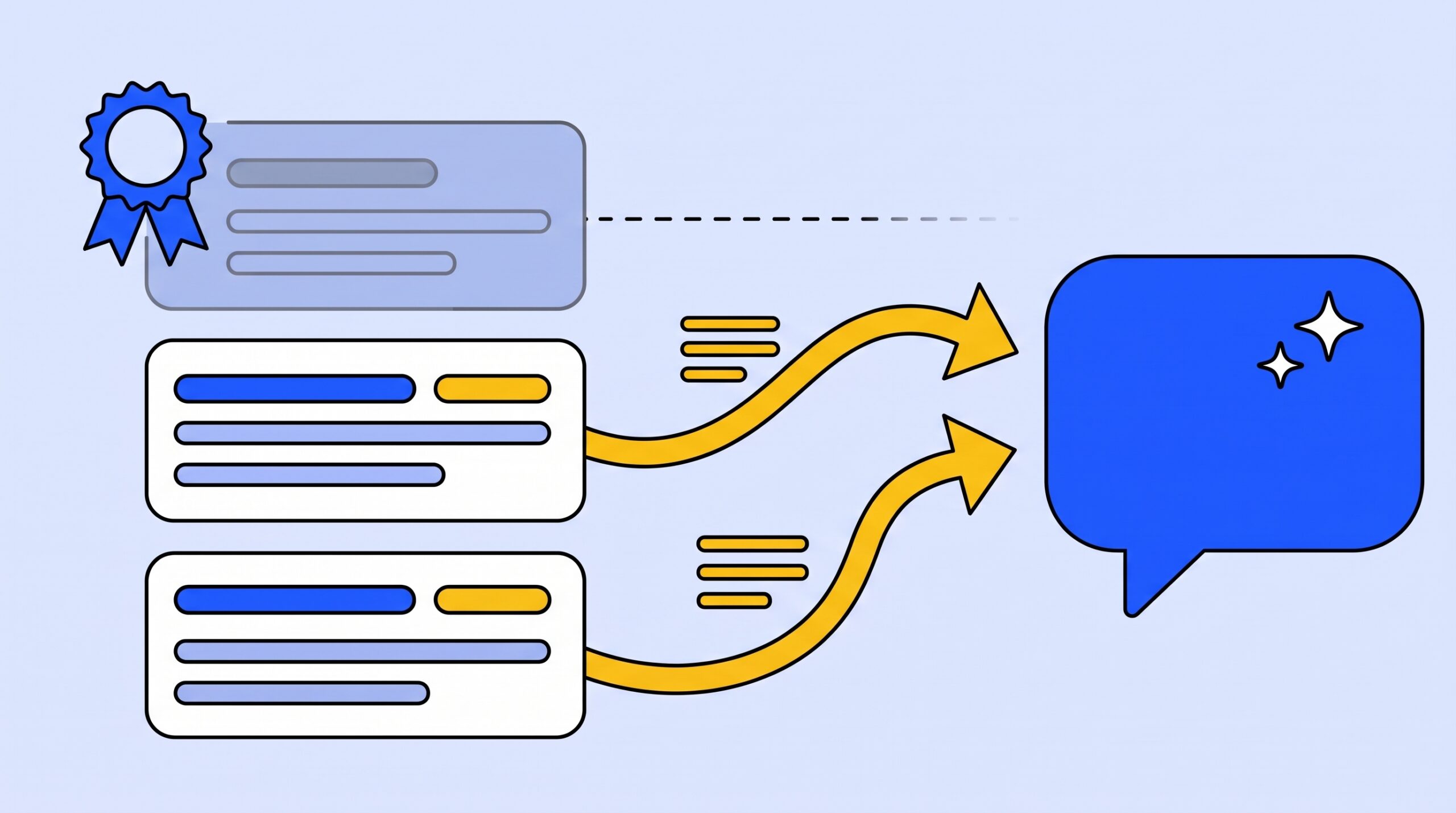
For over a decade, ranking meant visibility. That link is loosening. There are now three separate outcomes, and most SEO content only wins the first:
- Ranking – you’re eligible to be found in the blue links
- Mention – an AI names your brand in its answer
- Citation – an AI uses your page as the source it builds on
Citation is the prize, because that’s what gets seen. Pew Research Centre found that when an AI summary appears, users click a traditional search result in just 8% of visits, compared with 15% when there’s no summary, and only 1% click a link inside the AI Overview itself. When the AI answers the question well, rankings get far less attention than they used to.
Why AI often skips content that ranks well
In our experience auditing client sites, three structural issues explain most cases of content ignored by AI Overviews:
- The answer is buried. These systems generally lift passages rather than whole pages. An answer sitting three scrolls down, under a warm-up paragraph, is simply harder to extract.
- It’s written for a keyword, not a question. AI tends to work on conversational intent, so content built around a single phrase often misses how people actually ask.
- There’s nothing to trust. No data, no source, no first-hand evidence little a model can quote and stand behind.
The pattern we keep seeing: relevance signals get you ranked, while extractability and evidence make you easier to cite. Related jobs, but not the same one.
Ranking vs. AI citation, side by side
| WHAT MATTERS | TO RANK ON GOOGLE | TO BE CITED BY AI |
|---|---|---|
| Keyword coverage | Essential | Rarely enough on its own |
| Where the answer sits | Anywhere on the page | Usually front-loaded |
| Evidence & data | Optional | Often decisive |
| Query style | Keywords | Conversational questions |
| Topic depth | A strong page | A cluster of related answers |
That’s the heart of AI citations versus Google rankings: it’s entirely possible to win the left column and lose the right. Ahrefs put numbers to the gap in a study of 863,000 keywords and four million AI Overview URLs: only 38% of pages cited in Google AI Overviews also ranked in the top 10 for the same query, down from around 76% seven months earlier.
The SDM AI-Visibility Playbook
The working framework we use to make ranking content easier to cite and a practical answer to how to appear in AI-generated answers:
- Front-load the answer. Aim to answer the query directly in the first two sentences under each heading.
- Write to the question. Phrase headings the way customers actually ask them, not as keyword fragments.
- Add one verifiable fact per section a stat, a source, or a real result from your own work.
- Cover the cluster, not one post. Sources that answer a group of related questions tend to do better.
- Re-audit quarterly. Citation eligibility shifts with model updates, so this isn’t set-and-forget.
Deep Insight: depth is starting to beat position
Here’s the angle most guides miss. The instinct is to bolt on schema and an FAQ and call it “AI-ready.” The bigger 2026 lever looks like cluster coverage. Google’s AI runs fan-out queries quietly testing your content against sub-questions you never targeted. A single page rarely satisfies a fan-out on its own; a well-linked cluster stands a much better chance.
It’s telling that YouTube is now among the most-cited sources in AI Overviews. Authority appears to travel across related questions and formats rather than through one URL. If you want to improve visibility in AI search, it’s worth shifting effort from individual pages to owning topics.
Your Content Ranks. But Is It Being Seen Where Decisions Are Now Made?
Most Australian businesses are still optimising for a search results page fewer and fewer people actually read. They’re chasing positions, tweaking meta tags and celebrating rankings while the answer sitting above those rankings, the one their customers actually see, is built from someone else’s content.
You’ve read this article. You know where the gap is.
At Sydney Digital Marketing, we help Australian businesses turn content that ranks into content that gets cited, so you show up in the AI answers your customers ask first.
Book your free strategy session
One session. A clear picture of where your AI visibility is leaking. A practical plan for what changes next.

Article by
Simon Gould
CEO / Founder / Dad
Founder and leader, Simon established SDM back in 2012. Since then, he has helped 150 clients (and counting) to achieve their digital goals.[…]
