





- Google AI Overviews, AI Google Ads, Ads in AI Overviews, AI search advertising
Recent articles


our mailing list
Are Google Ads Showing Inside AI Answers Now?
You opened Google. You searched for something. Instead of the usual list of links, a big AI-generated paragraph answered your question at the top of the page.
And right there inside or just below that answer was an ad.
You probably noticed it. You might have even clicked it without realising it was paid.
That moment is not a glitch. It is not a test. It is Google’s biggest change to paid advertising in years. And if you are managing AI Google Ads for a business or planning a campaign right now, this changes what you need to know.
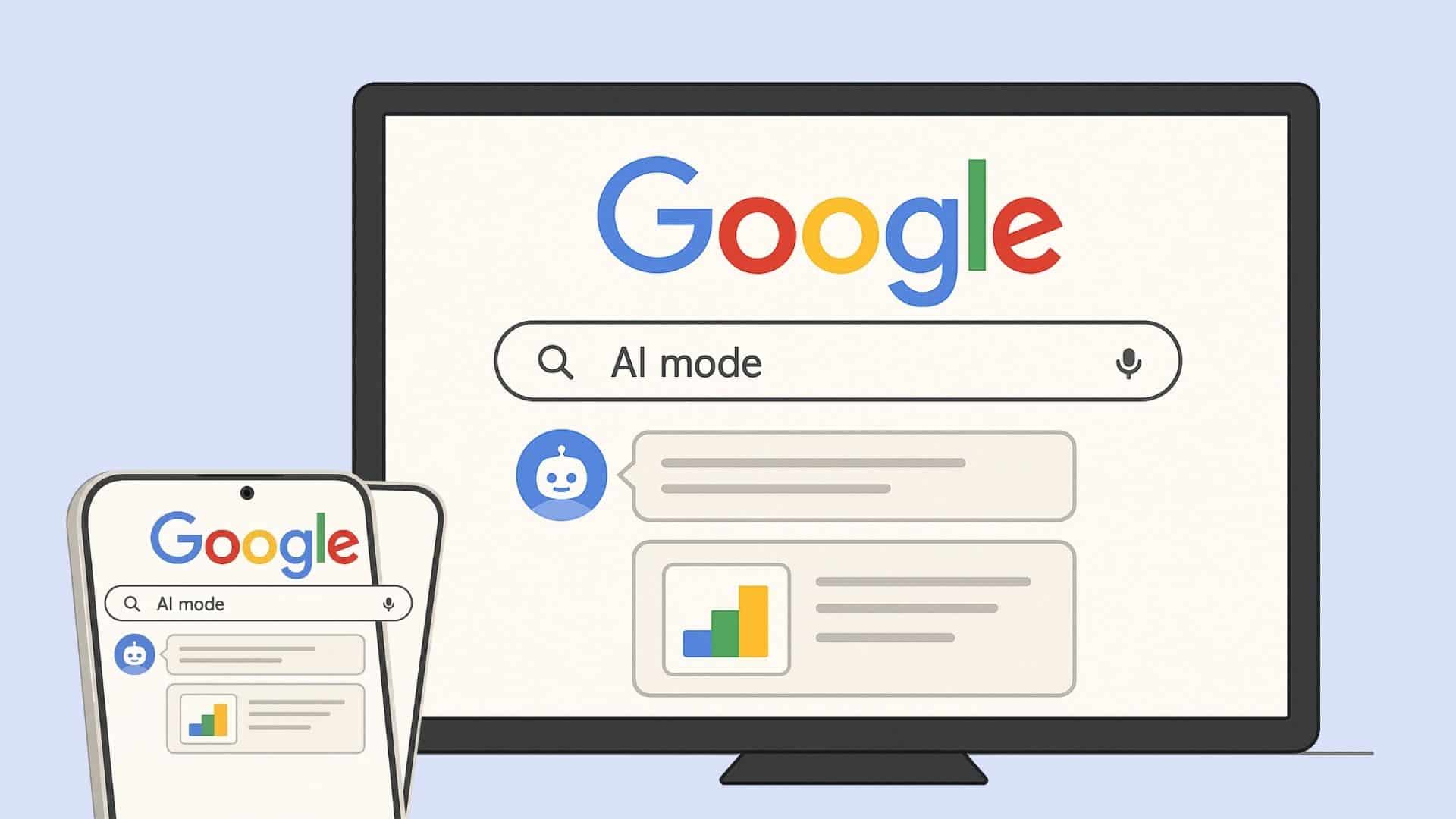
What Are Ads in Google's AI Search?
AI Google Ads are paid placements that appear within or around Google’s AI-generated search summaries known as AI Overviews. They are not a new campaign type or a separate product. They are an extension of your existing Search, Shopping, and Performance Max campaigns, surfaced automatically when Google decides your ad is relevant to both the user’s query and the AI answer on the page.
Google began testing this in the United States in late 2024 and has since rolled out across multiple markets, including Australia. If you are running eligible campaigns right now, your ads can already appear inside AI Overviews, whether you know it or not.
Key Takeaways
- Ads inside AI Overviews are already live in Australia across Search, Shopping, and Performance Max campaigns, no opt-in required.
- Relevance is now evaluated against two things: the user’s query and the content of the AI Overview itself.
- Exact match-only campaigns are not eligible for in-Overview placements.
- Users who see your ad inside an AI Overview are already informed they are closer to a decision, not just starting research.
- Transactional and local queries remain largely protected from AI Overview disruption.
- Early adoption of eligible campaign types means lower competition and cleaner performance data.
Are Ads Appearing Inside Google AI Answers?
Yes. This is real. It is live. And it is already happening in Australia.
Google first tested Ads in Google AI overviews in the United States in late 2024. By 2025, they expanded to desktop and rolled out across multiple English-speaking markets, including Australia, New Zealand, Canada, India, and Singapore.
As Google’s own advertising documentation confirms, Ads in Google AI overviews are now available on both mobile and desktop in Australia right now, today.
So if you are running Search, Shopping, or Performance Max campaigns and wondering whether your ads could show up inside an AI-generated answer, they already can. There was no big announcement. No opt-in button. It just started happening.
Where Do Ads Appear in AI Search Results?
There are three distinct places your ad can show in relation to an AI Overview. Knowing the difference matters for how you think about your visibility on the page.
- Above the AI Overview – Your ad appears before the user reads the AI-generated summary. This is premium screen real estate. Available in all 200+ markets where AI Overviews exist.
- Below the AI Overview – Your ad appears after the summary. The user has read the answer, formed a view, and sees your ad as a natural next step. Also available globally.
- Inside the AI Overview – Your ad sits within the AI-generated response itself. This is the newest and most powerful placement. Your ad is matched against both the user’s query and the content of the AI answer. Currently live in Australia via Search, Shopping, and Performance Max campaigns.
Which placement your ad gets depends on Google’s auction system, how relevant your ad is to both the query and the AI content, and your campaign type.
How Do Ads Work Inside AI Overviews?
AI overview Ads are paid placements that appear within or around AI-generated search summaries.
They are not a new campaign type. There is no separate product to buy. They are an extension of your existing campaigns surfaced when Google determines your ad is relevant to both what the user searched and what the AI Overview is saying.
Here is why that matters: relevance is now evaluated against two things at once. The user’s query. And the context of the AI-generated answer. Your ad has to fit both to appear inside the summary.
That is the key shift. Traditional search ads only needed to match a keyword. Google Ads AI need to match the moment the query and the conversation Google’s AI is already having with the user.
This is why campaign structure, creative quality, and landing page relevance now matter more than ever in AI search advertising.
Are Google Ads Integrated With AI Overviews?
Yes, but not in the way most advertisers expect. There is no separate AI overview Ads campaign to create. There is no switch to flip. No form to fill in. Google has integrated Ads in Google AI overviews directly into the existing auction system. Your current campaigns are already eligible if they meet the right conditions.
What has changed is how relevance gets evaluated. Previously, your ad just needed to match a keyword. Now, Google checks your ad against two things at once: the user’s query and the AI Overview’s content. If your ad fits both, it can appear inside the summary. If it only fits the keyword, it sits above or below.
You also cannot target these placements specifically, and you cannot opt out. Google makes the call based on relevance and auction signals. Your job is to make sure your campaigns give Google enough to work with.
If ads can now appear inside AI answers, the next question is which campaign types actually qualify, and the answer will affect whether your current setup is even in the running.
What Campaign Types Are Eligible for This Placement?
This is one of the most important practical questions in AI Google Ads right now because if you are running the wrong campaign type, your ads simply will not appear inside AI Overviews.
Here is exactly what is eligible:
- Search campaigns with broad match and Smart Bidding enabled
- Standard Shopping campaigns
- Performance Max campaigns
- AI Max for Search campaigns (Google’s newer AI-powered Search campaign feature)
And here is what is not eligible:
- Exact match only campaigns
- Standard Display campaigns
- Video-only campaigns
- Legacy formats without Smart Bidding
If your entire Google Ads account runs on tight exact match keywords with no broad match, no Performance Max, and no Shopping, you are invisible in this new placement. That does not mean you need to scrap your strategy. It means you need to layer in the right campaign types alongside what you already have.
Knowing your ads can appear inside AI Overviews is one thing. Knowing whether they actually are is a different challenge entirely.
What Advertisers Still Cannot See
Here is the part nobody talks about, and it is genuinely frustrating.
As of early 2026, Google does not give advertisers separate performance data for Google Ads in AI search results. Your ads appearing inside AI Overviews are bundled into “Top Ads” in your campaign dashboard. You cannot isolate them. You cannot compare CTR for in-Overview ads versus traditional placements. You cannot see which queries triggered the in-Overview placement.
Right now, the best workarounds are:
- Manually search your top keywords in Google – Check whether an AI Overview appears and whether your ad shows up in or around it.
- Track CTR and conversion trends at the keyword level – Any unexplained shifts on high-impression keywords may reflect AI Overview placement changes.
- Monitor impression share changes– A sudden drop in impression share on previously stable keywords can signal AI Overview competition.
Better reporting is coming. Google has signalled it will introduce dedicated controls and metrics for AI Overview and AI Mode placements as the feature matures. But right now, advertisers are making decisions with limited visibility, and the ones who stay on top of manual checks will have an edge over those waiting for the dashboard to catch up.
Do AI Answers Replace Traditional Search Ads?
No. But they do change where the value sits.
AI Overviews do not replace the search ads auction. Google still runs ads alongside every AI-generated response. The inventory has not shrunk; it has moved. AI search advertising has created new placements that sit inside AI answers inventory that did not exist a year ago.
What is changing is the intent of the user who sees your ad. Someone who has just read a 200-word AI summary of a topic is at a different stage than someone who typed a keyword and saw a list of blue links.
The AI Overview has already answered the “what is this” question. By the time they see your ad, they are asking, “Who do I go to?” That is actually a better moment to be an advertiser. The user is pre-informed and closer to action.
Think of it this way. The AI does the educational heavy lifting. Your ad gets the pre-qualified lead. In many cases, the AI does the educational heavy lifting, which means your ad reaches a user who is already informed and closer to a decision.
Will AI Search Reduce Paid Search Clicks?
On some query types, yes. On others, not at all. This is the nuance most people miss.
Informational queries are the most affected. If someone searches “what is a fixed rate home loan,” Google AI search answers that completely on the SERP. They do not need to click your ad to learn about it. Your ad for a fixed-rate loan product may still appear, but the user already has the information and may not be ready to act.
High-intent, transactional, and local queries are a different story. Someone searching “mortgage broker Sydney” or “compare home loans now” still needs to find a real person and take a real action. AI cannot apply for a loan for them. These queries retain strong click activity, and your paid presence there is just as important as it ever was.
The honest picture: AI Google Ads budgets spent on informational keywords face pressure. AI Google Ads budgets spent on commercial, transactional, and local keywords are largely protected and, in some cases, performing better, because AI has pre-qualified the user before they click.
The Future of Paid Search: What the Data Is Actually Telling Us
The data does not suggest paid search is dying. It suggests it is becoming more selective and more valuable per click.
That growth rate from near zero to one in four searches in under nine months tells you where Google is directing its monetisation focus. Paid search is not shrinking. It is being rebuilt around AI, and the inventory inside AI Overviews is the fastest-growing placement on the SERP right now. Advertisers who are not yet eligible for these placements are already missing a significant and growing share of the auction.
Here is where paid search performance is being affected versus protected right now:
The Future of Paid Search is not fewer ads. It is smarter ads, on the right queries, reaching users who arrive already informed and ready to move.
The advertisers who understand this distinction and allocate budget accordingly will find this environment works in their favour. The ones still spending heavily on informational keywords without adjusting will feel the squeeze.
How Will AI Search Affect PPC Performance?
The honest answer is: it depends on what you are advertising and how your campaigns are built.
For businesses targeting commercial and transactional queries, “Google Ads agency Sydney,” “hire a PPC manager,” “emergency plumber Bondi”, performance is largely holding up. These query types are not being swallowed by AI Overviews. The user still needs to find a real business, make contact, and take action. AI Google Ads on these terms are working just as hard as they ever did.
For businesses whose paid campaigns lean on informational keywords “what is PPC,” “how does Google Ads work,” “types of digital marketing”, the pressure is real. Google AI search answers these queries on the page. Fewer users are clicking anything, organic or paid.
The users who do click through are different, too. They have already read the AI summary. They are more informed, further along in their decision, and less likely to bounce. Every click costs more, but it is worth more. That is not a bad trade-off. It just requires you to think about your campaigns differently.
Should Advertisers Change Their Google Ads Strategy Because of AI?
Yes. But not by scrapping everything and starting again.
The fundamentals of great AI Google Ads have not changed. You still need a clear offer, strong creative, a relevant landing page, and conversion tracking that actually works. What has changed is the layer of strategy sitting on top of those fundamentals.
Here is what needs to shift:
- Move budget toward high-intent, commercial queries. Lower funnel terms, where someone is ready to book, hire, or buy, are more protected from AI Overview disruption than upper funnel informational terms.
- Stop relying only on exact matches. Exact match campaigns alone are not eligible for AI Overview placements. You need broad match, Performance Max, or AI Max-enabled campaigns in the mix.
- Protect your brand terms. Branded searches are the least disrupted query type in the future of paid search. Someone searching your business name wants you specifically. That visibility is worth defending with dedicated brand campaigns.
- Do not cut the budget during the transition. Advertisers who pull back hand market share directly to competitors who stay in. The shift is real, but pulling spend is the wrong response.
The best way to think about it: AI Google Ads optimisation in 2026 is about intelligent expansion, not tighter control. You feed the system clean data, clear conversion goals, and high-quality creative and let Google’s AI find the moments that matter.
AI Google Ads Optimisation: What Needs to Change Right Now
AI Google Ads optimisation now has two distinct layers. Get both right and you are in a strong position.
Layer 1 – Eligibility. Can your ads even appear in AI Overview placements? Ask yourself:
- Am I running Performance Max, Shopping, or Search campaigns with broad match?
- Do I have Smart Bidding enabled?
- Am I providing Google with enough conversion data to make good decisions?
If the answer to any of these is no, your first job is to fix eligibility before worrying about anything else.
Your bidding strategy is just as important as your campaign type; without Smart Bidding active, even well-structured campaigns will remain locked out of in-Overview ad placements.
Layer 2 – Quality. When your ad does appear inside an AI Overview, is it doing its job? This comes down to three things:
- Your headlines and descriptions do they speak to someone who has already been educated by the AI answer?
- Does your landing page give the user a clear reason to take the next step?
- Is your offer specific, credible, and compelling enough to earn the click over the AI’s generic summary?
If both layers are working, the new placements are a genuine opportunity. If they are not, your ad either will not appear or it will appear and not convert. Either way, the fix is the same. Better inputs, better outputs.
Take Stacks Goudkamp as an example. This Sydney personal injury law firm achieved a +60% increase in paid search conversions through an integrated SEM, social, email, and web strategy. The result did not come from spending alone. It came from having the right campaign structure, the right creative, and a website that converted the traffic the campaigns delivered.
“The service from SDM has been impeccable. They run all our Marketing SEO, SEM, built our website and CRM. They’re always available and have new ideas.”
That integration of paid, organic, and content working together is exactly what AI search advertising rewards right now.
AI Search Ads Action Plan
A practical starting point for advertisers navigating AI Overview placements:
- Check your core keywords – Search them manually in Google and note whether an AI Overview appears. These are the queries where placement eligibility matters most.
- Audit campaign eligibility – Confirm you are running at least one of: Performance Max, Standard Shopping, or Search with broad match and Smart Bidding. If not, that is the first fix.
- Reallocate spend away from informational terms – Keywords that trigger AI Overviews and carry no transactional intent are working less efficiently than they were. Shift that budget toward commercial and local queries.
- Strengthen landing pages – Users arriving from AI Overview placements are already informed. Your landing page should answer what comes next, not re-explain what the AI just covered.
- Track branded search and conversion quality – Monitor branded query volume in Search Console month over month. Growth here is a strong signal that your AI visibility is building familiarity before the click
How Can Brands Appear in AI Answers and Paid Ads Together?
This is the most powerful position an advertiser can be in, and it is completely achievable. It just requires two workstreams running at the same time.
The paid workstream is about campaign structure and creative quality. Run Performance Max or AI Max-enabled Search campaigns. Build a diverse library of ad assets. Make sure your landing page is relevant to both the query and the AI Overview context. That puts your ad into the eligible pool for in-Overview placements.
The organic workstream is about content and citation authority. To appear inside an AI Overview as a cited source, your content needs to be structured for answer extraction, have clear, direct headings, FAQ sections written in plain language, and FAQ schema markup. This is not a paid activity. But it directly supports your paid performance. Brands that are cited inside AI Overviews earn significantly higher paid click-through rates than brands that are not.
When both are working together, your content is cited in the AI answer, and your ad appears alongside or within it, you occupy more of the visible SERP than any competitor running only one strategy. That dual presence cited in the answer and visible as an ad gives you more SERP coverage than any single-channel strategy can achieve.
What Does AI Search Advertising Mean for Digital Advertising?
It means the gap between brands that invest thoughtfully and brands that just “set and forget” their campaigns is getting wider fast.
AI search advertising rewards relevance, creative quality, and strategic thinking more than it rewards raw spend. A well-built campaign will outperform a poorly built campaign at twice the budget because the placements that matter most are determined by relevance signals, not just bid amounts.
For Sydney businesses, this is actually good news. You do not need to outspend the big national players. You need to outthink them. Build the right campaign structure, pair it with content authority, and you can show up in places your competitors have not even thought to look.
Take Perfect Practice, a Sydney business in the medical fitout space. By restructuring their Social Media Marketing and Search Engine Marketing to match user intent at the right stage, they achieved a -76% reduction in cost per lead from paid social. Less spend. Better results. That is what happens when strategy leads the campaign, not just the budget.
Strategy is only useful if it translates into action. Here is exactly what to do with your campaigns right now.
How to Get Your Google Ads Showing in AI Search
This is the practical part. Here is how to give your ads the best chance of appearing in Google Ads AI placements right now.
Run the Right Campaign Types First
Before anything else, check your eligibility. Your ads cannot appear inside AI Overviews from a standard exact match keyword campaign. You need at least one of the following active in your account:
- Search campaigns with broad match and Smart Bidding enabled
- Standard Shopping campaigns
- Performance Max campaigns
- AI Max for Search campaigns
If your account only runs tight exact match with no Smart Bidding and no Performance Max, you are not in the pool for in-Overview placements at all. That does not mean tearing everything down. It means layering in the right campaign types alongside what you already have, then monitoring performance carefully.
Building a strong Performance Max strategy is one of the most effective ways to ensure your campaigns remain eligible for AI Overview placements as Google continues to expand this inventory.
Build a Creative That Works in an AI-First SERP
The user arriving at your ad via an AI Overview has already read a summary of the topic. They are not looking for more information. They are looking for the next step.
Your creative needs to reflect that shift. Here is what works:
- Lead with what you offer: not what it is “Get a free quote today” outperforms “Learn about our services” every time
- Be specific: “Sydney’s top-rated Google Ads agency since 2014” is more compelling than “we run great Google Ads”
- Write multiple headlines and description variations: Google’s AI rotates these in real time and picks the best combination for each user
- Include a clear, direct call to action: in every variation: “Book now,” “Get a quote,” “Talk to us today”
- Avoid generic messaging: the AI has already handled the generic answer. Your ad needs to offer something that the summary could not
Use Your Landing Page as a Signal, Not Just a Destination
Most advertisers treat the landing page as the thing that happens after the click. In 2026, it is also part of what determines whether the click happens at all.
Google reads your landing page when evaluating whether your ad is relevant to an AI Overview placement. A thin, poorly written landing page sends a low-relevance signal. A clear, well-structured page that matches the intent of the query helps your eligibility and your Quality Score at the same time.
Write landing pages for a user who is already informed:
- Address the questions they still have after reading the AI summary
- Give them a specific reason to take the next step, a guarantee, a timeline, a process, a proof point
- Make it easy to act with one clear CTA, no distractions, no unnecessary navigation
The landing page is no longer just about conversion. It is about deserving the placement.
Think Intent Layers, Not Just Keywords
Old school AI Google Ads management was about building keyword lists and organising them into tightly themed ad groups. That approach is not gone, but it is no longer the whole job.
In 2026, start with intent, not keywords. Ask:
- Which queries in my account are informational: “what is,” “how does,” “why do”?
- Which are commercial “best,” “top-rated,” “compare”?
- Which are transactional: “hire,” “book,” “get a quote,” “near me”?
Then allocate accordingly:
- Informational queries use your content strategy to appear in AI Overviews as a cited source. Reduce paid spend here unless your conversion data shows it is still working.
- Commercial queries maintain a strong paid presence. Users are comparing options, and your ad is part of that consideration.
- Transactional queries protect these aggressively. This is where the commercial intent lives. AI Overviews rarely resolve these on-page because the user still needs to act.
This is AI Google Ads optimisation at its most strategic. Not just keywords, intent architecture. Knowing which part of the funnel each query represents, and making sure your paid and organic presence aligns with what the user actually needs at that moment.
Your Competitors Are Already in These Placements. Are You?
When a new ad placement opens up, the early movers get lower competition, lower CPCs, and cleaner data on what works before everyone else catches up. That window does not stay open forever. The same thing happened with Shopping ads, with responsive search ads, and with Performance Max. Early in, early advantage.
Right now, most Sydney businesses are still running the same Google Ads campaigns they were running two years ago. The same campaign types. The same match types. The same creative. They are not appearing in AI Overview placements, not because they cannot, but because nobody told them to check.
You are reading this. You know what to check.
The future of paid search is not a threat to good advertisers. It is a leveller. You do not need the biggest budget. You need the smartest structure, the best creative, and a campaign that is built for where Google is going, not where it was.
That is exactly the kind of work we do at Sydney Digital Marketing. We have been building and managing AI Google Ads campaigns for Sydney businesses since before most agencies were even talking about AI Overviews.
If you want to know where your campaigns stand right now, which queries are triggering AI Overviews, which placements you are missing, and what to change first, let’s talk.
Book your free strategy session with Sydney Digital Marketing
One session. A clear picture of where you are. A practical plan for where to go next.
Article by
Simon Gould
CEO / Founder / Dad
Founder and leader, Simon established SDM back in 2012. Since then, he has helped 150 clients (and counting) to achieve their digital goals.[…]