





- Marketing Conversion Rate Optimisation, Conversion Rate Optimisation Strategies, AI for UI/UX Design, Future of UX Design with AI, CRO AI
Recent articles
our mailing list
From Guesswork to Predictive UX: CRO in the Age of AI
For years, Marketing Conversion Rate Optimisation was built on a simple, reactive loop: observe behaviour, form a hypothesis, test a variation, and then repeat. Teams relied on heatmaps, A/B tests, and analyst intuition to piece together why users converted or why they didn’t.
This approach worked when data volumes were manageable and digital experiences were relatively static. But the internet has changed. Traffic sources have diversified, user journeys have become non-linear, and consumer behaviour now shifts week to week.
Under this pressure, traditional optimisation strategies started showing cracks:
- Tests moved too slowly to keep up with live traffic trends.
- Hypotheses were often shaped by opinion or generic “best practice” rather than quantified behaviour.
- Insights were blindly copied from one site to another, ignoring unique user intent.
The issue wasn’t a lack of effort or tools. It was that guess-and-test CRO cannot scale in a real-time, behaviour-driven internet. That is why CRO hasn’t disappeared, it is evolving into something faster and more intelligent.
Key Takeaways: The Shift to Predictive UX
- From Hindsight to Foresight: Traditional CRO looks at why users left. Predictive UX uses AI to anticipate what users will do next and adapts the experience instantly to prevent drop-offs.
- Beyond the Click: Success is no longer measured by simple pageviews. AI monitors micro-signals like hesitation, scroll velocity, and rage clicks to diagnose friction invisible to the human eye.
- Always-On Optimisation: The days of monthly “stop-and-start” A/B tests are over. AI-driven funnels run continuous, automated experiments to “self-heal” leaks as they happen.
- Heatmaps 2.0: Static heatmaps are being replaced by predictive attention modelling, allowing designers to “pre-test” layouts and ensure CTAs are visible before a page even goes live.
- Strategy Meets Speed: AI doesn’t replace the UX team; it handles the grunt work. Humans set the strategy and ethical guardrails, while AI executes experiments at a speed humans cannot match.
Master Your Marketing Conversion Rate Optimisation
Let’s be honest: the old way of doing Marketing Conversion Rate Optimisation felt like trying to fix a leaky tap while the water was still running and only checking the results a month later. By the time you found a “winner,” your customers had already moved on.
To stay ahead, Conversion Rate Optimisation Strategies have to stop being reactive. The business case for this shift is undeniable; research says a well-designed, frictionless user interface can skyrocket conversion rates by up to 400%.
When you layer in CRO AI to automate these improvements, you aren’t just guessing you’re scaling that growth across every page in real-time.
This isn’t about replacing your team with robots; it’s about giving your website the “smarts” to learn and adapt in real-time, so you aren’t stuck waiting for an analyst to tell you what went wrong three weeks ago.
To stay ahead, your Marketing Conversion Rate Optimisation strategies have to stop being reactive and start being predictive.
Conversion Rate Optimisation Strategies that Works
If you want to move away from just “guessing” what might work, your Conversion Rate Optimisation Strategies need to be built around how people actually use the internet today. Here’s a simple way to look at it:
- Stop Fixing Everything at Once: Don’t waste time on a page that doesn’t get traffic. Look at where people are dropping off right before they buy and start there. It’s the fastest way to see a jump in revenue.
- Watch for “Rage Clicks”: We’ve all been there, clicking a button that doesn’t work until we want to throw the phone. Use tools to spot these moments. It’s usually a sign that your layout is confusing or a link is broken.
- Test for Different Intents: Not everyone is ready to buy on their first visit. Some people are just “tyre-kicking.” A good strategy offers helpful info to the researcher and a fast lane to the checkout for the person in a rush.
- Speed Up Your Experiments: In the past, people would run one test for a month. Today, you can use CRO AI to test five different headlines at once. The faster you test, the faster you grow.
- Listen to the “Micro-Signals”: If someone keeps scrolling up and down on a pricing page, they’re probably confused or looking for a discount. Recognising these patterns lets you step in with the right message at the right time.
What is Predictive UX and How Does it Work?
Predictive UX uses intelligent modelling to forecast a visitor’s next move and adjust the interface instantly to remove friction. By fixing obstacles before a user decides to leave, you shift from reacting to old data to actively securing conversions in real-time.
At a practical level, predictive UX applies AI models trained on behavioural, contextual, and historical data to estimate what a user is most likely to do next. Instead of waiting for a test to conclude weeks later, predictive systems adapt the experience in real-time to prevent friction before it turns into abandonment.
Traditional CRO asks:
“What worked in the last test?”
Predictive UX asks:
“What is this user likely to do next, and how should the interface respond right now?”
When we talk about CRO AI, we’re really talking about moving away from the slow, manual trial-and-error process. In the past, a human had to look at a spreadsheet, guess what was wrong, and manually set up a test.
CRO AI is essentially the “brain” behind your website, doing this work automatically. It’s an intelligent system that constantly watches how people move through your site, identifies the patterns that lead to sales (and the ones that lead to exits), and then makes the adjustments for you. It turns your website from a static page into a living, learning tool that gets smarter with every single visitor.
Predictive UX handles the customer once they arrive, but your AI for SEO strategy ensures you’re the entity they find first in a world of AI-driven search answers.
How AI Predicts Behaviour on Websites?
AI predicts behaviour by identifying recurring sequences in interaction data at a scale humans cannot process manually.
AI doesn’t understand users emotionally, but it is exceptionally good at identifying behavioural patterns. Modern behavioural analytics for CRO ingests large volumes of interaction data, including click paths, scroll depth, and hesitation time to forecast outcomes.
At Sydney Digital Marketing (SDM), we use these insights to move beyond basic pageviews. By analysing these signals, our team can identify:
- Likelihood of drop-off: Calculating the probability of a bounce before the user leaves.
- Friction points: Spotting rage clicks (repeated clicking in frustration) or form errors instantly.
- Conversion intent: Distinguishing between “window shoppers” and serious buyers based on micro-behaviours.
This allows us to diagnose friction as it emerges and intervene with optimisation strategies before your revenue is affected.
The Practical Shift: Traditional CRO vs. Predictive UX
If you want to know why your current strategy feels slow, it’s likely because you’re still operating in the left column.
The right column isn’t just a tech upgrade; it’s a different way of doing business.
| Feature | Traditional CRO | Predictive UX |
|---|---|---|
| Strategy | Reactive: Looking at what went wrong last month. | Proactive: Predicting what a user will do next. |
| Testing | Linear: One slow A/B test at a time. | Parallel: Testing dozens of changes simultaneously. |
| Speed | Cycles: Waiting weeks for a "winning" report. | Continuous: Improving the site every single hour. |
| Visibility | Surface Level: Tracking clicks and pageviews. | Deep-signal: Tracking hesitation and intent. |
| Fixes | Guesswork: Testing ideas based on a gut feeling. | Precision: Fixing AI-Ranked Friction Points first. |
Best AI Tools for UX Design & CRO
You don’t need to overhaul your entire tech stack to start seeing results. These are the tools that are actually moving the needle in 2026, helping teams move from “guessing” to “knowing” in a matter of hours.
- VWO (Visual Website Optimisation): This is your engine for always-on testing. It uses AI to automatically route traffic to your winning pages, so you’re making money while you sleep.
- Attention Insight: A predictive heatmap tool that shows you where users will look before you go live. It’s like having a 15-minute simulation of a week-long usability test.
- Figma Make: The industry standard for AI for UI/UX Design. It takes your design system and builds out entire user flows from simple prompts, removing the “blank canvas” bottleneck.
- Hotjar (with AI Insights): It doesn’t just show you recordings; it watches them for you. The AI identifies the exact moments of frustration so you can skip the fluff and fix the friction.
- Lately.ai: Essential for your AI Marketing Strategy. It breaks down your high-performing content into dozens of social posts, ensuring your messaging remains consistent across every touchpoint.
Is Heatmapping Dead?
Definitely not, but the way we use it has changed. Traditional heatmaps show where users clicked or scrolled in the past, offering little context about why they took those actions.
Modern platforms now combine heatmaps with AI-driven behavioural analysis. Instead of just analysing attention after the fact, predictive heatmaps forecast where users are likely to focus before a page goes live.
How we apply this at SDM: We use predictive attention modelling during our design phase to “pre-test” layouts. This ensures your key calls-to-action (CTAs) are visible and that the user journey is intuitive before we even launch a live traffic experiment. It’s not just about seeing where they clicked; it’s about designing for where they will look.
The Future of UX Design with AI
There is a lot of talk about the Future of UX Design with AI, and for some, it’s a bit daunting. Using AI for UI/UX Design is really about getting to the finish line faster. Instead of spending hours manually moving elements around to see what fits, AI UX Design Tools allow us to test layouts instantly.
This means we spend less time on the “grunt work” and more time thinking about the actual person on the other side of the screen.
How we use AI Tools for UX Design:
- Predicting Attention: Before we even launch a page, we use AI Tools for UX Design to see where eyes will land. It’s like having a “sneak peek” at how a customer will react.
- Removing the Guesswork: Instead of having a “hunch” that a layout works, we use data-backed insights to guide our UX Audits, ensuring every button and image has a purpose.
- Smart Personalisation: We use these tools to create sites that feel less like a static brochure and more like a helpful shop assistant that remembers what you’re looking for.
The goal isn’t to let a machine make the decisions. It’s to use the best technology available to create a smoother, more human experience for your customers.
The Future of Always-On Funnel Optimisation
Traditional CRO runs in cycles; AI-native CRO runs continuously. In the old model, tests were launched, analysed weeks later, and acted on even later. By the time a change was implemented, user behaviour had often already moved on. AI-driven funnel optimisation changes this dynamic by turning your Website into an “always-on” learning system.
Instead of reacting after conversion rates fall, predictive analytics act as an early-warning system. They identify rising drop-off risks through micro-signals like hesitation, repeated errors, or pricing friction well before they impact your bottom line.
An automated funnel is only as good as the traffic entering it. Pairing your on-site optimisation with a human-in-the-loop AI for Google Ads strategy ensures you aren’t just getting clicks, you’re getting high-intent buyers.
Automated Experimentation: Speed at Scale
AI doesn’t just predict problems; it helps solve them faster than humanly possible. When AI controls experiments, the constraint of “one test at a time” disappears. Instead of guessing what to test, models surface where a change will have the highest impact and run optimisation across multiple micro-variations at once.
- Real-Time Adaptation: High-intent users can be fast-tracked through the funnel, while high-consideration users are automatically shown more reassurance or social proof.
- Preventing Loss: The funnel stops merely reporting lost revenue and starts preventing it by adapting the journey in real-time.
This is where the difference between AI and traditional UX testing becomes clear. We help you shift from managing isolated experiments to orchestrating intelligent systems where humans set the strategic direction, and AI handles the speed of execution.
How the System actually Fixes your Funnel
If you’re still thinking about a “conversion funnel” as a static map you draw on a whiteboard, you’ve already lost. In the time it takes you to read this sentence, a thousand different things are happening on your site that you can’t see.
Research shows that companies excelling at personalisation generate 40% more revenue from those activities than slower competitors. If you aren’t using AI to serve the right experience at the moment of intent, you’re handing market share to the competition.
When we talk about AI-driven Marketing Conversion Rate Optimisation, we aren’t just talking about better tools. We’re talking about a system that watches, learns, and acts while you’re asleep.
How AI Solves the Conversion Puzzle
In the past, we had to guess why people left; today, we use data to make sure they stay. By integrating Marketing Conversion Rate Optimisation directly into the user journey, the system moves from simply reporting problems to actively solving them. It’s the difference between a static page and a responsive, “living” storefront that adapts to every visitor.
- Identification of Invisible Friction – Forget about clicks. The system is watching for the hesitation. It sees the user who hovers over the “Subscribe” button for four seconds and then bolts. It sees the “rage clicks” on a mobile menu that won’t open. It captures the digital body language that a human analyst would take weeks to find in a report.
- Quantified Revenue Impact – Most CRO audits are just long lists of things that might be wrong. AI doesn’t do “might.” It calculates exactly how much revenue a specific friction point costs you in real time. It tells you: “Fix this checkout field first, because it’s costing you $4,000 a day.”
- Real-Time Behavioural Intervention – This is the big shift. If the system sees a high-intent buyer starting to wobble, it doesn’t wait for you to run a test next month. It acts. It might simplify the layout or serve a specific piece of social proof right when that user needs it most.
- Testing Multiple Ideas at Once – A human team can run maybe two or three A/B tests a month. This system runs dozens of micro-variations simultaneously. It’s testing headlines, button placements, and image layouts all at once, finding the winning combination in hours instead of weeks.
- Automatic Funnel Correction – Once the system finds what works, it doesn’t wait for your permission to implement it. It automatically routes your traffic to the version that’s actually making money. This is a self-healing funnel, a system that identifies a leak, tests the plug, and fixes it before your revenue even takes a hit.
Conversion Rate Optimisation Best Practice for the Real World
You can have all the fancy tech in the world, but if you don’t follow the basics, you’re just spinning your wheels. Here is what we consider Conversion Rate Optimisation Best Practice at Sydney Digital Marketing, the stuff that keeps the user happy and the sales coming in:
- Don’t Make Them Think: The second a user has to pause to figure out where to click next, you’ve lost them. Your navigation should be so simple that a kid could use it.
- Fix the Boring Stuff First: Before you start testing fancy AI-driven layouts, make sure your site loads fast, and your forms actually work on a mobile. No amount of “predictive UX” can save a broken website.
- Respect the “Friction”: Not all friction is bad. Sometimes, asking an extra question in a form helps you get better leads. The trick is knowing when to smooth the path and when to add a speed bump.
- Data Over Opinions: We’ve all been in meetings where the loudest person chooses the button colour. Modern CRO AI takes the ego out of the room by showing you exactly what the customers are actually doing.
- Keep Your Brand Voice: AI can help you move things around, but it shouldn’t sound like a robot wrote your copy. Keep it human, keep it local, and keep it consistent with who you are.
What Does CRO Look Like When AI Controls Experiments?
When AI controls experiments, CRO shifts from managing isolated tests to orchestrating continuous learning systems. It moves marketing conversion rate optimisation from a “launch and wait” cycle to a high-velocity environment where hundreds of micro-variations run simultaneously.
Traditional testing is linear: you test Headline A vs. Headline B, wait for significance, and then implement the winner.
This is slow and often outdated by the time it finishes. CRO AI removes this bottleneck by testing multiple elements (headlines, layouts, images) in parallel, automatically routing traffic to the winning variation in real-time.
Instead of manually setting up a test for “Holiday Sale,” the AI dynamically adjusts pricing displays, urgency badges, and hero images based on live inventory levels and user behaviour, finding the optimal combination without human intervention.
From Managing to Mastering
The role of the CRO team changes fundamentally. In an AI-led environment, humans don’t spend time setting up individual A/B tests. Instead, act as the strategic “guardrails.”
- Humans Set Direction: We define the brand voice, the commercial goals, and the ethical boundaries.
- AI Handles Speed: The system executes the “grunt work” of serving variations and calculating statistical significance.
This allows for automated experimentation that scales. The funnel stops reporting loss and starts preventing it. We don’t just ask “what won?”; we ask “what is the system learning?”, ensuring your growth strategy becomes more resilient with every visitor.
The SDM Predictive UX Playbook
Applying predictive modelling to improve marketing conversion rate optimisation doesn’t start with buying new tools; it starts with focus.
At Sydney Digital Marketing, we move beyond random testing by following a structured, data-led framework. Here is how we build predictive UX systems for our clients:
- Capture Deep Signals: We stop tracking just “pageviews” and start capturing meaningful behavioural analytics like hesitation time, scroll velocity, and form abandonment.
- Rank by Revenue Impact: We use predictive analytics to rank friction points based on how much revenue they are likely costing you, ensuring we solve the most expensive problems first.
- Targeted Experimentation: Instead of guessing, we feed these insights into targeted experiments that address specific user barriers.
- Real-Time Personalisation: We implement adaptive flows that adjust content based on user intent, creating a seamless journey from landing to checkout.
The Result: Fewer random tests, faster learning, and better commercial outcomes.
It’s one thing to read about AI and “predictive funnels,” but it’s another thing entirely to see it working on your own site. If you’re tired of staring at data and wondering why people aren’t buying, let’s just have a real conversation about it.
We’ll take a look at your current setup, find where the “leaks” are, and figure out a plan that actually makes sense for your business.
Skip the guesswork and Book a Growth Call to see how CRO AI can skyrocket your conversion rates by up to 400%.
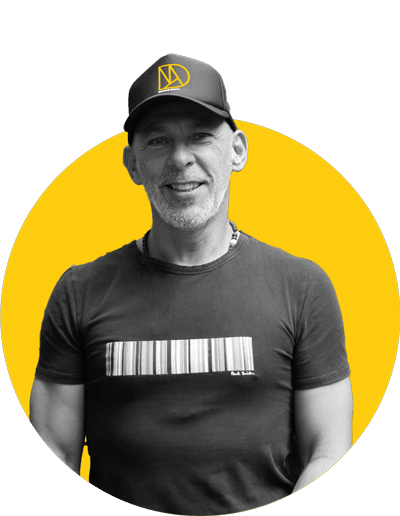
Article by
Simon Gould
CEO / Founder / Dad
Founder and leader, Simon established SDM back in 2012. Since then, he has helped 150 clients (and counting) to achieve their digital goals.[…]