



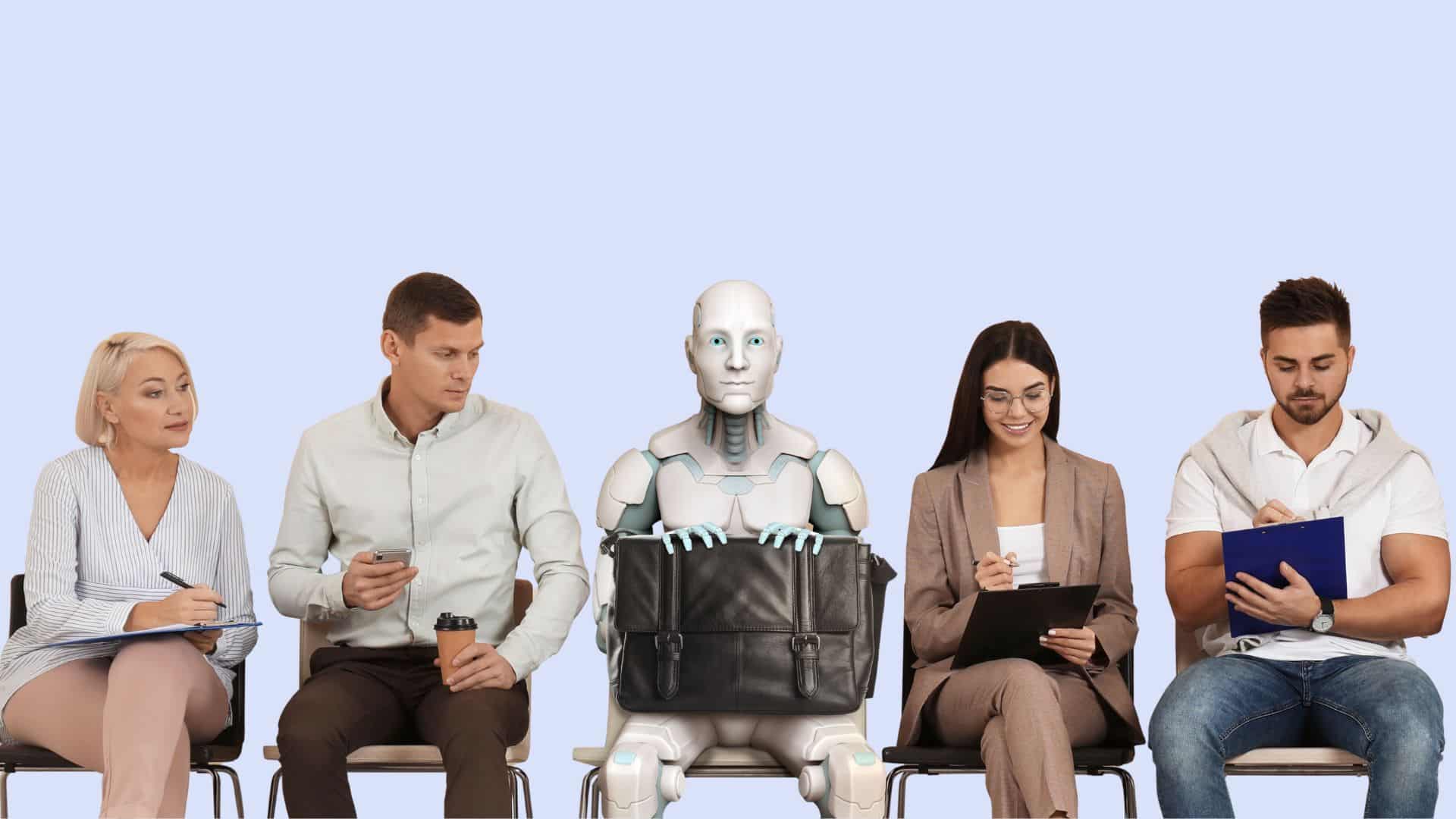
- AI Marketing, Benefits of Using AI, Future in AI, Future in Artificial Intelligence, Artificial Intelligence and Marketing, AI Tools for Marketing
Recent articles



our mailing list
AI Is Not Taking Your Job, It’s Rewriting It: What Modern Marketers Must Do Now in 2026
AI isn’t replacing marketers, but it is changing how marketing works. Smarter, faster systems are replacing the “slow” era of manual reporting and clunky setups. This shift is about learning how human insight and machine speed work together to help teams move more quickly and think more clearly. By clearing the “busywork,” AI creates the space needed for high-impact growth work, such as strategy and customer understanding.
What once took days now takes minutes. Research, testing, optimisation, and reporting happen faster than ever before. But here’s the truth most people miss: AI doesn’t replace creativity, it creates space for it. It clears the busywork so people can focus on what actually drives growth: strategy, storytelling, brand positioning, and customer understanding.
And that human side will never disappear. Because at the centre of every great campaign is still a human decision on what to say, how to say it, and who to say it to. Technology can speed things up, but people still shape meaning.
At Sydney Digital Marketing, we’ve spent over a decade helping businesses turn their Digital Marketing strategy into real revenue using SEO, Google Ads, Social Media, HubSpot, and Conversion-Focused Website Design and today, we’re helping brands layer AI on top of those foundations to scale with confidence.
Key Takeaways: The 2026 Marketing Reality
- The 70/30 Operational Standard: High-performing teams use AI to handle 70% of the executional “grind” reporting, data clustering, and multi-variant production, allowing humans to reinvest 100% of their energy into the strategic 30% (Storytelling, Brand Judgment, and Empathy).
- From Operator to Orchestrator: The role of the marketer has shifted from “doing the work” to “directing the flow.” Success now requires AI System Literacy, the ability to brief, audit, and refine autonomous agents rather than performing manual tasks.
- The Rule of Automation: To maintain brand integrity, you must automate the “How” (speed, scale, and patterns) but always personalise the “Why” (emotional resonance, ethics, and strategic narrative).
- AEO is the New SEO: Buyers have moved from “searching” to “briefing” their own AI agents. To stay visible, brands must optimise for Answer Engine Optimisation, ensuring their content is cited as a “Trusted Source” by conversational AI.
- The Hybrid Advantage: AI provides the high-velocity engine, but humans provide the steering wheel. Without human Strategic Oversight, AI speed simply scales brand-washing and generic output.
Benefits of AI: Why Strategic Marketers are Winning in 2026
At Sydney Digital Marketing, we’ve seen that high-performing teams have moved past the “experimental” phase. They no longer ask if they should use AI, but how fast they can deploy it to clear the path for better thinking.
The division of labor is now crystal clear: AI handles the scale, while humans handle the soul. By shifting the heavy lifting to intelligent agents, brands achieve five critical competitive advantages:
- Cost Efficiency: We’re seeing a total collapse in “cost-per-asset.” By using agents for research and first-draft production, your team stops paying for the “grind” and starts investing in the final 10% of polish that actually converts.
- Speed of Iteration: The era of the “monthly report” is dead. You now have the power to move from month-long campaign cycles to real-time pivots, adjusting your message the moment the market shifts.
- Data Pattern Recognition: AI detects the “whispers” in your data. It identifies hidden buyer intent across millions of data points, surfacing opportunities that even the most seasoned human analyst would overlook.
- Reduced Waste: With predictive bidding, every dollar is intentional. Your budget is no longer “scatter-gunned” across low-intent windows; it’s autonomously funneled into the exact moments where conversion probability is highest.
- Scalability Without Headcount: You can now 10x your market reach and content output without a linear increase in overhead. AI allows your core team to remain lean, agile, and focused on high-level growth strategy.
What the Future in AI Actually Means for Marketers
While many see the future in artificial intelligence as a mystery, for modern marketers, it means one thing: the transition from ‘Campaigns’ to ‘Always-On Intelligence.’ By 2026, we are moving beyond just “using AI” to “Agentic Marketing.”
This means systems don’t just suggest a keyword; they build the landing page, set the bid, and refine the offer autonomously. The future in AI is less about the tools we use and more about the speed at which we can pivot based on machine-driven insights.
What is AI Marketing in 2026?
AI Marketing is the transition from manually managed campaigns to autonomous systems that utilise real-time behavioural data to learn, adapt, and optimise continuously without human intervention. The primary differentiator is that decisions, not just tasks, now happen inside the system, forcing marketers to move from “doing the work” to “directing the flow.”
Key Impacts of AI on Marketing Strategy (2026)
- AI detects patterns humans miss across search behaviour, creative performance, and intent signals at scale.
- Humans still define the meaning, positioning, messaging, tone, risk tolerance, and brand boundaries.
- Optimisation becomes continuous, not campaign-by-campaign or month-by-month.
- Strategy errors show up faster, which is why clarity now matters more than effort.
- The advantage goes to teams who guide AI, not teams who expect it to think for them.
That’s why AI marketing doesn’t replace marketers; it exposes weak thinking and amplifies strong direction.
AI in Market Research
AI in market research has replaced static reporting with a live intelligence layer. By analysing millions of unstructured data points from social threads to reviews, AI identifies emotional “Trigger Moments” and shifts in consumer behaviour weeks before they hit search engines.
This allows for Predictive Trend Modelling and Synthetic Persona Testing, where we simulate campaign responses against digital buyer models to find the winning message before you spend a cent on live media.
Picture this: you’re about to launch a new product, but have a nagging doubt: Is the price too high? Instead of wasting $20k and a month on focus groups, you “interview” a Synthetic Persona, a digital twin of your customer. Within minutes, the AI tells you your slogan feels “cold” rather than “premium.” You get the clarity to pivot your entire story before spending a single cent on a failed campaign.
AI and Advertising: The Shift to Autonomous Media Orchestration
The synergy between AI and advertising has moved beyond simple “automated bidding”. We have entered the era of Autonomous Media Orchestration, where systems don’t just place ads, they predict outcomes before a single impression is served.
Predictive Bidding & Real-Time Flux
Traditional advertising relied on “set and forget” budgets. Today, AI tools for marketing monitor millions of live signals from localised weather patterns and competitor price drops to real-time cultural sentiment.
The Advantage: If the AI detects a dip in conversion probability for a specific audience segment, it pulls back instantly, reallocating that capital to high-velocity opportunities in milliseconds. Your budget is never “wasted” on low-intent windows; it remains in a state of constant, profitable flux.
DCO+ (Dynamic Creative Optimisation 2.0)
We’ve moved past basic A/B testing into Agentic Creative. AI and advertising platforms now re-render visual assets and adjust “emotional hooks” in real-time to match the psychological profile of the viewer.
Case in Point: A user valuing “security” sees an ad focusing on collision-avoidance tech; a user looking for “prestige” sees the same ad re-rendered to highlight luxury finishes. The product is the same, but the meaning is personalised by AI to suit the individual’s motivation.
Predictive Attention Modelling
With the total death of third-party cookies, AI and advertising now rely on Deep Pattern Modelling. AI analyses anonymised clusters of behaviour, scroll speed, cursor motion, and time spent per frame to forecast engagement probability. This allows for hyper-accurate targeting that is both 100% privacy-compliant and more effective than old-school tracking.
The Human Guardrail: While execution is autonomous, the Strategy remains human. At Sydney Digital Marketing, we ensure humans define the “Risk Tolerance” and “Brand Boundaries”, ensuring AI speed never comes at the cost of brand safety or your unique voice.
Picture this: A sudden heatwave hits Sydney on a Sunday while you’re at the beach. Your competitors are offline, but your AI and advertising system is already awake. It detects the spike in intent and autonomously shifts your budget from “winter coats” to “cooling fans” in milliseconds. You don’t just react to the market; you capture the highest-intent traffic while your competition is still asleep.
The AI Inflection Point: Marketing Has Never Been Here Before
The AI inflection point represents the first time in history where marketing execution, analysis, and optimisation happen faster than humans can manually manage, shifting the industry from reactive reporting to proactive, real-time response.
This is a more significant evolution than mobile or programmatic because it changes the fundamental nature of how artificial intelligence and marketing work as a single unit.
While many worry that AI will replace jobs, the reality in 2026 is a redefinition of roles. At Sydney Digital Marketing, we’ve seen that AI in digital marketing doesn’t create winners; it amplifies them. The real divide isn’t between humans and machines; it’s between marketers who wait for the “right moment” and those who embrace the benefits of using AI to clarify thinking and accelerate execution.
The real divide isn’t between marketers and machines. It’s between those who learn how to work with AI and those who wait for the “right moment” to start. This is the new inflection point. Not a replacement of marketers, but a redefinition of what effective marketing looks like.
The New Marketing Stack (2026): Human-Led, AI-Accelerated
The modern marketing stack has evolved from a disconnected toolkit into a unified ecosystem where strategy, creativity, and data move together through AI-driven execution. This stack allows AI and advertising to function autonomously. Tasks like research, clustering, optimisation, reporting, and analysis no longer require hours of manual effort. Instead, they happen continuously in the background, giving marketers the freedom to think, create, and make decisions with far more clarity.
To achieve this level of scale, the modern stack relies on four specific categories of AI tools for marketing that move beyond simple automation into active orchestration:
- Creative Production Agents: Tools like Jasper or Midjourney (integrated via API) that don’t just “write” but generate thousands of first-draft content variants based on specific brand guardrails.
- Predictive Optimisation Engines: These are the backbone of AI and advertising. Systems like Albert.ai or AdScale that use machine learning to forecast performance and shift budgets across Google and Meta before a human even opens a dashboard.
- Behavioural Intelligence Platforms: Tools like HubSpot’s AI-powered CRM or 6sense that provide AI-first consumer discovery. They “brief” the marketer on which leads are ready to buy based on hidden intent signals.
- Voice & Governance Guardians: Specialised AI tools for marketing that act as a “Brand Smoke Detector,” scanning all AI-generated output to ensure it aligns perfectly with your established Brand Voice Decisions.
This shift has unlocked a level of scale that was historically impossible. By using AI marketing agents, campaigns can now adjust budgets and creative variations instantly based on live performance signals.
- Intelligent Personalisation: Journeys adapt in real-time based on behaviour.
- Automated Clustering: AI in market research now allows for keyword and audience clustering to happen instantly.
- Continuous Testing: Experiments run without waiting for human production timelines.
And with the rise of intelligent agents, Campaigns adjust budgets, targeting, and creative while they are still live. But the distinction still matters: AI can automate processes, not purpose. It can accelerate patterns, not replace judgment. It can handle speed, but it can’t define direction.
This is where many businesses go wrong. Some automate too much and lose their strategic edge. Others under-utilise AI and remain stuck in slow, manual workflows.
The most effective marketing stacks today are focused and intentional:
- A CRM that supports behavioural personalisation,
- Analytics that surface insights rather than hide them,
- A content engine built for AI-driven discovery,
- Agent-supported workflows that reduce friction,
- And a team that knows how to orchestrate it all.
This shift has unlocked a level of scale that was historically impossible. By evolving traditional Marketing automation into ‘Agentic Marketing,’ your systems no longer just send scheduled emails they dynamically adjust every touchpoint of the customer journey based on live intent signals.
What AI Changes in Consumer Behaviour (And What It Doesn’t)
In 2026, artificial intelligence and marketing have converged to change consumer behaviour from traditional “searching” to “briefing,” where buyers use AI agents to filter options, summarise reviews, and execute purchases based on intent rather than just keywords. This shift towards the future in artificial intelligence means brands must optimise for “machine readability” to ensure they are the primary recommendation provided by AI assistants.
The impacts of AI on discovery are profound. Consumers now expect answers on demand and relevance without friction.
- Zero-Visit Discovery: Many buyers now reach a decision within an AI interface (like ChatGPT or Google SGE) before ever clicking a link.
- The “Briefing” Habit: Instead of browsing a category, users provide a specific brief (e.g., “Find me a sustainable CRM for a mid-market team”).
- Speed of Trust: Consumers reach emotional checkpoints faster because AI in market research and personal assistants have already vetted the “technical” details for them.
Desire is still human. Value is still human. The story is still human. The only real difference is that buyers now reach their emotional checkpoints faster, armed with more information and shaped by more influence than ever before.
The marketers winning today aren’t the ones trying to outsmart AI; they’re the ones learning how to show up inside AI-driven ecosystems. They design content that surfaces in summaries, train their brand to appear in conversational interfaces, align messages with creator-led behaviour, and stay consistent across every moment where decisions are formed.
AEO and the Evolution of AI SEO
The way your customers find you has fundamentally changed. Buyers have moved from “searching” to “briefing” their own AI agents. To stay visible in this landscape, your strategy must pivot toward AI SEO.
This isn’t just about keywords; it’s about Answer Engine Optimisation (AEO) ensuring your content is structured so clearly that it is cited as the “Trusted Source”.
The Human + AI Hybrid Model (Winner’s Framework)
The winning framework for 2026 is a Human + AI hybrid model where AI serves as the high-velocity execution engine and humans serve as the strategic directors who define brand voice, ethical boundaries, and creative narrative. This model allows for AI marketing automation to handle 70% of the production load, while humans reinvest their time into the 30% that actually drives growth: strategy and storytelling.
What is the 30% Rule in AI Marketing?
The “30% Rule” has become the standard for high-performance marketing. It states that while AI can automate 70% of the executional grind reporting, data clustering, and initial content drafting humans must reinvest 100% of their energy into the strategic 30%.
It is the non-negotiable division of labour for modern marketing: while AI handles the 70% of executional “busywork” like data processing and multi-variant production, humans reinvest 100% of their energy into the strategic 30% Brand Judgement, Strategic Narrative, and Emotional Interpretation. The benefits of using AI are most visible when you separate “the how” (AI’s speed and scale) from “the why” (human taste and intuition).
It’s not human vs AI, it’s human with AI
Will AI Replace Marketers?
The short answer is no, but marketers who use AI will replace those who don’t. In 2026, AI is a “co-pilot,” not the pilot. It excels at the 70% of marketing that is mechanical: data processing, real-time ad bidding, and high-volume content variations.
However, it cannot replicate the final 30% that actually drives growth: human empathy, cultural intuition, and strategic brand judgment. Your value has shifted from doing the work to directing the system. AI handles the speed and scale, while you provide the meaning and direction.
The most valuable skills aren’t about “doing”; they are about directing. While AI excels at finding patterns, it cannot replicate the human pillars of a winning strategy. To stay irreplaceable, focus on these five areas:
- Strategic Judgment: AI can suggest 100 paths; only a human can decide which one aligns with the long-term business vision and current risk tolerance.
- Cultural Intuition: AI remixes the past; humans sense the “now.” Your ability to understand sarcasm, social nuances, and shifting cultural moments keeps a brand relevant.
- Emotional Empathy: Marketing is human-to-human. Understanding the irrational reasons people buy fear, status, or belonging remains a human-only superpower.
- AI Orchestration: The value has shifted from writing copy to “briefing” systems. Learning to guide, edit, and audit AI outputs is the new standard for senior roles.
- Commercial Acumen: AI doesn’t care about your P&L. Marketers who can connect creative ideas directly to a CFO’s bottom-line results are the ones who stay indispensable.
Is AI Actually "Good"
The short answer is that AI is the single greatest multiplier of marketing talent in history. It is “good” because it removes the ceiling on what a lean team can achieve, turning months of manual research into minutes of actionable insight.
However, its value is entirely dependent on the quality of the human briefing it receives. AI is not a replacement for a marketer; it is a high-performance engine that requires a skilled driver to stay on course.
What Can I Do With AI?
Right now, you should use AI to move from reactive reporting to proactive growth. This means using predictive modelling to forecast customer churn before it happens, allowing for instant intervention. You should also use it to generate and test dozens of first-draft content variants in a single afternoon to see what actually stops the scroll.
Finally, use it to map consumer intent so your brand becomes the primary source cited in AI conversational answers. Essentially, AI handles the grind of iteration while you own the direction.
olor sit amet, consectetur adipiscing elit. Ut elit tellus, luctus nec ullamcorper mattis, pulvinar dapibus leo.
How do I integrate AI without losing Human Creativity?
Integrating AI into your workflow doesn’t mean handing over the steering wheel. In 2026, the most successful brands follow a Human-Led Creative Loop that ensures efficiency never erodes originality.
- Stage One: Human Context & Briefing
Every campaign must start with human intuition. AI cannot understand your brand’s “soul” or the specific emotional nuances of your current business challenge. At this stage, humans define the strategic narrative, the core problem, and the emotional target.
- Stage Two: AI Exploration & Idea Expansion
Once the human brief is set, use AI as a “Creative Sparring Partner.” Instead of one idea, ask your AI tools for marketing to generate 50. Use them to explore alternative angles, metaphors, and cultural references that your team might have overlooked. AI handles the volume of exploration, so you don’t have to.
- Stage Three: The Human “Taste” Filter
This is the most critical checkpoint. A senior marketer reviews the AI outputs to select the “Golden Nugget.” You are looking for the 20% of ideas that have cultural resonance and align with your brand voice. You discard the generic “AI-wash” and keep only what feels authentic.
- Stage Four: Human-Augmented Refining
Once the winning direction is chosen, humans add the “Special Sauce.” This involves injecting wit, personal anecdotes, and brand-specific “Easter eggs” that make the content feel lived-in and real. AI builds the foundation; humans do the finishing work.
- Stage Five: AI-Driven Multi-Variant Scaling
After the human-approved “Master Creative” is finished, AI takes over to scale it. It adapts the core message for every platform, turning a blog post into 10 LinkedIn teasers, 5 video scripts, and 20 ad variations, ensuring the human-led strategy is delivered with maximum operational velocity.
The 2026 Marketing Playbook: Tasks, Roles, and Tools
To move from “using AI” to “architecting growth,” your organisation must adopt a structured operational guide. This playbook defines exactly where the machine accelerates and where the human leads.
In 2026, efficiency is determined by how accurately you separate “Mechanical” tasks from “Strategic” ones.
| Task Category | STATUS | EXECUTION EXAMPLE |
|---|---|---|
| Data and Reporting | Automate | AI agents pull real-time CRM and Ads data into automated executive summaries. |
| Creative Iteration | Automate | Generating 50 visual/copy variations of a high performing "Master Ad" |
| Media Bidding | Automate | AI and advertising systems adjust bids in real-time based on live intent signals. |
| Brand Voice | Personalise | Defining the unique "Wit" and emotional hook that makes your brand human. |
| Strategic Oversight | Personalise | Interpreting the "Why" behind data and conducting final "human-in-the-loop" reviews. |
In 2026, we’ve moved beyond simple software. We now manage Marketing Agents autonomous systems that don’t just store data but execute strategy.
Here is the essential stack for an AI-led operation:
- Search & Visibility: AI SEO & AEO
Recommended Tools: Semrush / Surfer SEO
The Shift: We are no longer just tracking keywords. These tools now focus on AI SEO, optimising your content so it becomes the “primary cited source” in AI-driven answer engines like ChatGPT, Perplexity, and Google SGE.
- Creative & Copy: Brand Voice Orchestration
Recommended Tools: Jasper / Writer
The Shift: Instead of generic prompting, these platforms use Brand Voice 2.0 training. They learn your specific “soul” and style, allowing you to scale thousands of on-brand content variants across every channel in minutes.
- Media Buying: Autonomous Media Orchestration
Recommended Tools: Albert.ai / AdScale
The Shift: The “set and forget” budget is dead. These agents monitor live cultural sentiment and competitor price drops, autonomously reallocating your budget across Google, Meta, and TikTok to follow high-intent traffic in real-time.
- CRM & Lifecycle: Predictive Human Intelligence
Recommended Tools: HubSpot (Breeze AI) / 6sense
The Shift: Your CRM is now a proactive hunter. It uses predictive lead scoring to “brief” your team on which customers are about to buy (or churn) before they even take an action on your site.
Pro Tip for 2026: The real “unfair advantage” isn’t the tools themselves; it’s the integration. Use a platform like Zapier Central to link these agents together, creating a unified system where your SEO insights automatically trigger a new ad creative or an email nurture sequence.
The Execution Blueprint (How to Integrate AI Operationally)
Modern marketing teams can’t rely on old hierarchies or slow, linear workflows anymore. AI hasn’t just changed what tools we use; it’s changed how work actually moves through a marketing organisation. The teams that win aren’t adding layers or headcount. They’re redesigning how decisions, execution, and accountability flow.
AI doesn’t eliminate the need for marketers. It eliminates the need for wasted motion.
The New Team Structure in an AI-Led Marketing Operation
As AI absorbs executional load, marketing teams don’t get bigger. They rebalance. Responsibility shifts upward, not outward. Junior marketers stop grinding through repetitive production and become operators of AI systems. They manage inputs, monitor outputs, and keep workflows running smoothly.
Mid-level marketers move from “doing the work” to orchestrating it. They shape prompts, interpret performance patterns, connect insights to action, and ensure AI is working toward real business goals rather than vanity metrics.
Senior marketers focus almost entirely on strategy, judgment, narrative, and direction. They decide what matters, what doesn’t, and where risk is acceptable. This is the layer AI cannot replace. An AI-ready team isn’t defined by tools. It’s defined by clarity of ownership.
The Four Foundations of Integrating AI Into Marketing Operations
Most AI implementations fail because businesses focus on tools rather than on structure. In practice, effective AI-led marketing rests on four foundations working together.
- Tools: Platforms that execute and optimise across ads, SEO, CRO, content, and CRM without constant manual input.
- Data: Clean, reliable signals from tracking, conversions, CRM, and behavioural data. AI amplifies whatever data you feed it, good or bad.
- Process: Clear pathways for turning insights into action without bottlenecks or endless approvals.
- Governance: Brand rules, quality control, ethical boundaries, and human review layers that protect trust and consistency.
AI doesn’t just drive traffic; it masters CRO by autonomously running thousands of micro-experiments on your landing pages, ensuring that the ‘human soul’ of your copy is always paired with the most high-converting layout possible. Without these foundations, AI creates noise. With them, it creates leverage.
How AI Actually Works Inside a Modern Marketing Workflow?
Instead of running campaigns in fixed cycles, modern marketing teams use AI as a continuous operating system that follows a repeatable loop:
- AI gathers inputs at scale
Search behaviour, competitor movement, customer questions, CRM signals, creative performance, and historical data are pulled into a live intelligence layer, replacing manual research and scattered spreadsheets. - AI generates options, not decisions
Content drafts, creative variations, audience segments, keyword clusters, bid strategies, and testing ideas are produced at scale, expanding what’s possible without choosing direction. - Humans choose direction and meaning
Marketers decide what message fits the brand, which angle aligns with strategy, what tone feels right, and what risks are acceptable. Judgment stays human. - AI executes and optimises in real time
Budgets shift, targeting adjusts, experiments run, and delivery improves continuously based on live performance, not delayed reviews. - Humans oversee quality, ethics, and growth impact
Teams review outcomes, protect brand voice, sense-check insights, and steer future decisions so automation drives momentum without sacrificing trust or creativity.
This loop is where AI delivers value without hollowing out the brand.
Common AI Implementation Mistakes That Slow Teams Down
Even strong teams stumble when they rush AI adoption without structure. The most common mistakes aren’t technical; they’re strategic.
- Automating messaging before positioning is clear.
- Letting AI optimise weak or misleading conversion signals.
- Stacking tools without defining workflows.
- Removing human quality control too early.
- Scaling speed before strategy is solid.
AI doesn’t fail teams. Weak foundations do.
When implemented with clarity, AI becomes a force multiplier. When implemented carelessly, it simply makes problems show up faster.
What’s Coming Next (2026-2029)
- The Rise of Agents: AI agents will take over dozens of micro-tasks across the marketing stack from research to optimisation, shifting teams into a “set, supervise, and scale” rhythm. This is where AI marketing automation becomes standard, not advanced.
- Autonomous Media Buying: Platforms will make budget decisions, adjust bids, and optimise placements without human intervention. Humans oversee strategy; AI handles execution. This is the real future of AI in advertising.
- Predictive Creative: Creative performance becomes forecastable. AI will predict what messaging, visuals, and angles resonate before campaigns launch, reducing guesswork and speeding up experimentation.
- Multi-System AI Management: Brands will use multiple AI systems working together, not standalone tools. Content, analytics, optimisation, and personalisation will run in synchronised cycles powered by AI tools for marketing.
- AI-First Funnels: Customer journeys will be built around intent, not pages. Funnels shift from linear to dynamic as AI reshapes paths in real time based on behaviour.
- Death of Keyword-First Thinking: Search evolves into AEO-first, conversation-first, and question-first. Discovery becomes about context, relevance, and clarity, not keywords. Brands that answer what humans actually want to know will dominate AI in digital marketing and the next era of organic visibility.
AI Isn’t Here to Replace You. It’s Here to Expose You.
If your job is repetitive, predictable, or mechanical, AI will do it faster and better, and it won’t apologise.
The winners are the marketers who merge intuition with intelligence, story with speed, creativity with capability.
AI won’t replace your team, but your competitors using AI will.
Most businesses don’t fail with AI because of the tools. They fail because the foundations are weak.
At Sydney Digital Marketing, we believe AI is a powerful engine, but humans are the pilots. We combine a decade of strategic expertise with AI to scale your results, not just your overhead.
If you want a marketing system built for speed, intelligence, and scale, we can architect it Book a strategy call
Speak with us. Get ahead now, not later!
Article by
Simon Gould
CEO / Founder / Dad
Founder and leader, Simon established SDM back in 2012. Since then, he has helped 150 clients (and counting) to achieve their digital goals.[…]
